Pages

Showing posts with label session. Show all posts

Saturday, September 18, 2010

How World Communion Sunday Became Peacemaking Sunday

Presbyterians have celebrated World Communion Sunday since the mid-1930s. At that time North Americans were experiencing the economic upheaval of the Great Depression, and many were concerned about the instability in Europe and the possibility of another world war. A group of Presbyterian ministers met to pray and talk about the church’s role in such a time. Rediscovering the unifying power of Christ in the Lord’s Supper, they reaffirmed that in Christ all Christians are one, regardless of nationality, race, or ethnicity. From their meeting came the first World Communion Sunday in 1936. In the years that followed other denominations began to celebrate this special Sunday.

In the mid-1970s a later generation of Presbyterians, also experiencing a time of challenge following the country’s defeat in Vietnam, revisited World Communion Sunday. Many members of the United Presbyterian Church in the United States of America were feeling a sense of urgency to work for peace. Thirty-one presbyteries sent overtures to the General Assembly asking that the church direct energy toward peacemaking. As a result, the 187th General Assembly (1975) commissioned the Advisory Council on Church and Society “to reassess the concept of peacemaking . . . in the light of our biblical and confessional faith.” The Advisory Council created a special task force, chaired by William Creevey, then pastor of St. Peters by the Sea, Rancho Palos Verdes, CA, to study and prepare a report on peacemaking.

Members of the task force met, prayed, and studied, then came to the conclusion that peacemaking was central to the gospel and to the mission of the church, that it was at the heart of being a Christian, and that it ought to have priority in the church. Their work was a call directed at the inner life of Presbyterians to commit to work for peace individually and as a church. A commitment to peacemaking, though, would need to be reflected both in the structure and in the finance of the church so that it could be translated into action. The task force recommended creating a national peacemaking program and a special offering to fund the work of peacemaking.

According to Robert Smylie, one of the resource staff for the task force, Dean Lewis, director of the Advisory Council on Church and Society and another of the resource staff, saw that it was necessary to do something that had never been done with a special offering—recommend that the Peacemaking Offering’s receipts be divided among every level of the church so that congregations, presbyteries, synods, and the General Assembly’s program could all find creative ways to work for peace. Congregations would keep 25 percent, synods and presbyteries would receive 25 percent, and 50 percent would go to the newly formed Presbyterian Peacemaking Program.

The task force agreed that World Communion Sunday, when Christians of all nations and peoples celebrate their unity in Christ, was an ideal time to receive the offering that would be used for peace work in the name of Christ.

The 192nd General Assembly (1980) adopted the task force’s work, “Peacemaking the Believers’ Calling.” Thirty years later Presbyterians continue to work for peace and to receive the offering used to fund that work.

Thanks to Robert Smylie, William Creevey, and Dean Lewis for insights into the development of the Presbyterian Peacemaking Program and the Peacemaking Offering. 

About the Peacemaking Offering

The Peacemaking Offering was created in 1980 to support the efforts of the Presbyterian Church (U.S.A.) to live out a deeper commitment to peacemaking as part of our faithfulness to God. It is one of four special offerings designated by the Presbyterian Church (U.S.A.)’s General Assembly.

Most churches receive the Offering on World Communion Sunday, the first Sunday in October, which this year is October 3. We encourage churches to use whatever Sunday works best for them.

Each congregation is encouraged to retain 25 percent of the Offering it receives to use for local ministries of peacemaking within the church and its community. Twenty-five percent is used by presbyteries and synods, and 50 percent is used by the General Assembly ministries through the Presbyterian Peacemaking Program.

In accordance with the action of the 217th General Assembly (2006), we encourage congregations to consider directing a portion or all of their 25 percent of the Peacemaking Offering as a faithful Christian response to the HIV/AIDS pandemic. Find out what the Presbyterian Church (U.S.A.)’s International AIDS Ministries is doing.

Monday, September 7, 2009

FPC History: Women on the Boards

While the history of women in Christian service at the First Presbyterian Church of Matawan doesn't begin with their being elected to church office, it is well worth noting the names of the following pioneers for their achievement in breaking down the gender barrier to board membership.

The Session was established in 1820. Two women were first named to the board in 1959.
  • Mrs Arnold C Massie
  • Mrs William H Groft
The Board of Trustees was established in 1816. Miss J Mabel Brown was named as the first woman to the board in 1956 and became its first female President sometime before 1960.

The Board of Deacons was established in 1943. Six women were first named to the board in 1952.
  • Mrs Henry Luhrs
  • Mrs J Fred Robinson
  • Mrs E Story Hallock
  • Mrs John C Hessey
  • Mrs Vernon F Beyer
  • Mrs Walter Stamm
Note that Presbyterians Pioneer at Matawan, written in 1959, quaintly associates each of the married women with their husbands, so I don't have their first names at my disposal. Maybe someone remembers their names or could look them up in church records? It could be a reply to this posting or written up more formally in an upcoming Lantern.

Sunday, September 6, 2009

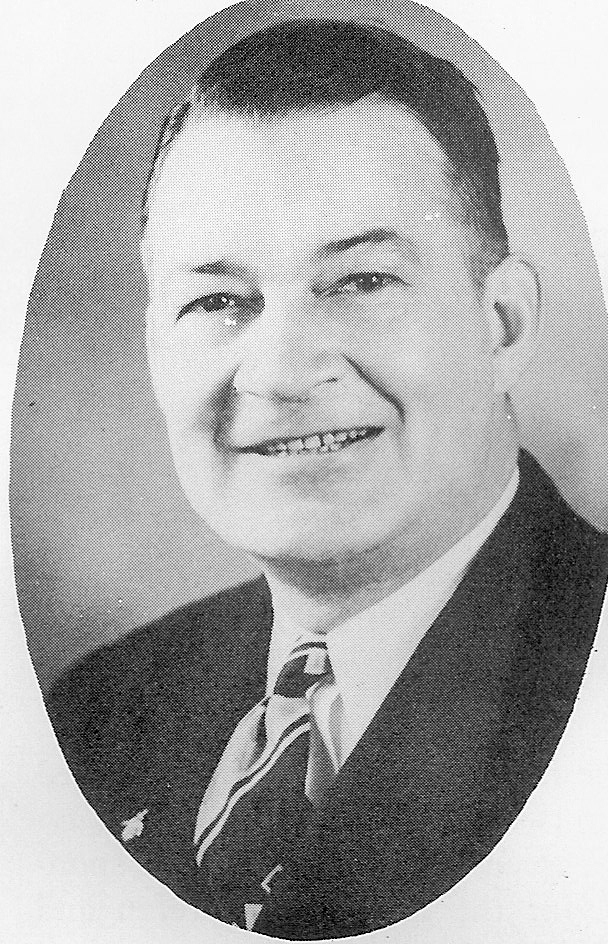
FPC History: Rev Robert B Berger (1936 - 1949)

In September 1936, when the First Presbyterian Church of Matawan was on Main Street and celebrating its 250th anniversary, the Reverend Robert B Berger was installed as pastor. Rev Berger came to Matawan from the First Presbyterian Church of Kingston in Kingston, New York.

During Rev Berger's tenure, which ran until 1949, there was such church growth that new hymnals had to be ordered. And the size of the Session had to be doubled, from 6 members to 12. The membership nearly doubled, growing from 271 to 490. The number of Sunday School teachers likewise nearly doubled, from 14 to 26 to teach 189 students, when only 110 students had been registered previously.

The church established its first Board of Deacons in 1943. According to Presbyterians Pioneer at Matawan, "These young men supervised ushering at services and, during World War II, prepared packages for men in service overseas."

The Presbyterian Church established the rotary system in 1949. According to the new rule, an Elder was allowed to serve a 3-year term with the option to extend one additional term. James S Brown, Jr, the editor of  Presbyterians Pioneer at Matawan, more than suggests that FPC Matawan had mixed emotions about the General Assembly's decision when he writes, "The wounds made by such a change were shared by the Matawan Church with all churches that were keeping pace with the times by making this adjustment."

The church began to enjoy their new status. A church secretary was hired in 1948. Every member was able to receive a personal copy of Presbyterian Life magazine. A silver communion service was given as a memorial gift. Chimes were donated. A brass altar cross donated in 1937 survived the 1955 fire to be used in the new sanctuary. And, by January 1949, the congregation formed a Building Committee to completely renovate the building and add a separate Sunday School building.

Rev Berger accepted a call to be pastor at the First Presbyterian Church of Carthage in Carthage, Missouri. (The church's website is under construction but the church has a very active Facebook site, and the minister, Matthew Roberts, has his own blog.)

Upon his departure, FPC Matawan presented Rev Berger with a scroll, which read:

The First Presbyterian Church of Matawan, New Jersey, has had a blessed era of spiritual and material prosperity under Rev Berger's tireless leadership, and the severance of his ministerial relations leaves us with a deep sense of loss.